Three Days in Siem Reap
Siem Reap: Temples by Day, Feast at Night
3 Days in Siem Reap
We stopped in Siem Reap to see the temples of Angkor Wat, like most people do on a Southeast Asia trip. What we didn't expect was to fall as hard for Cambodia as we did, not really for the temples, though they're extraordinary, but for the people, the layered and often heavy history, and the food, which quietly ended up being the thing we talk about most.
Landing in Siem Reap felt easier than we braced for. The airport is modern and clean, almost oddly so, clearly built for a much bigger wave of tourism than actually shows up. We'd applied for our visa online a few days before, so immigration took no time at all, and within the hour we were in the car with our guide and driver, already talking about lunch.
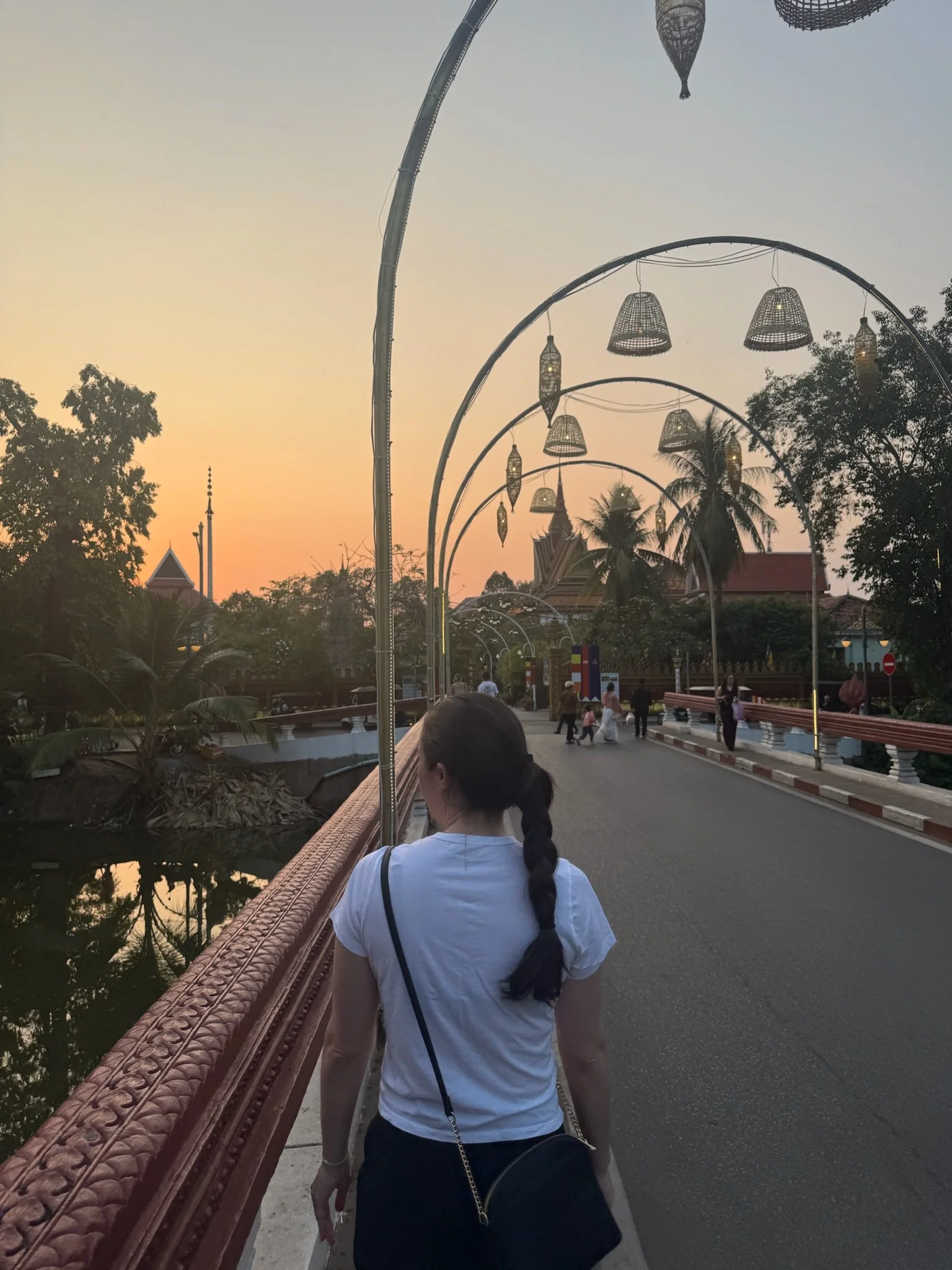
We'd chosen to stay in Wat Bo Village, just across the river from downtown, just a five-to-ten-minute walk from Pub Street, close enough to wander in but far enough to fall asleep to something quieter than nightclub bass. Downtown itself is dense with luxury hotels and hostels alike, and if that's what you want, it's all there. But Wat Bo had its own restaurants and small hotels, and we liked being a little removed from the center of gravity.
The lesser-known temples
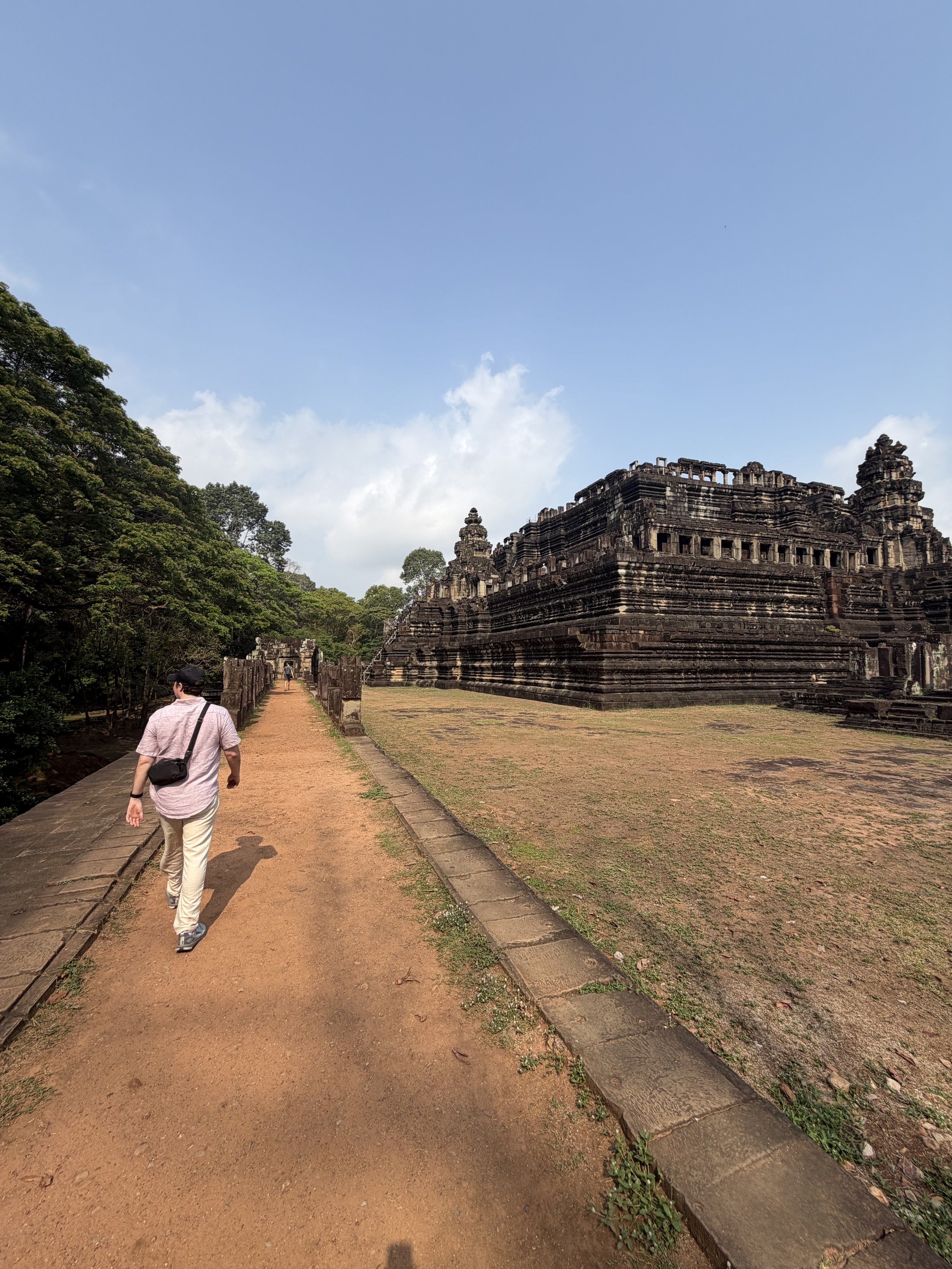
Our first real outing was a half-day tour to temples outside the main Angkor Wat complex, the guide's suggestion, and a good one. On the drive out, our private guide started talking about the Khmer people: their history, their pride in it, and the harder truth that the country's current economic situation hasn't caught up to that history. It set a tone for the day that stuck with us more than any single temple did.
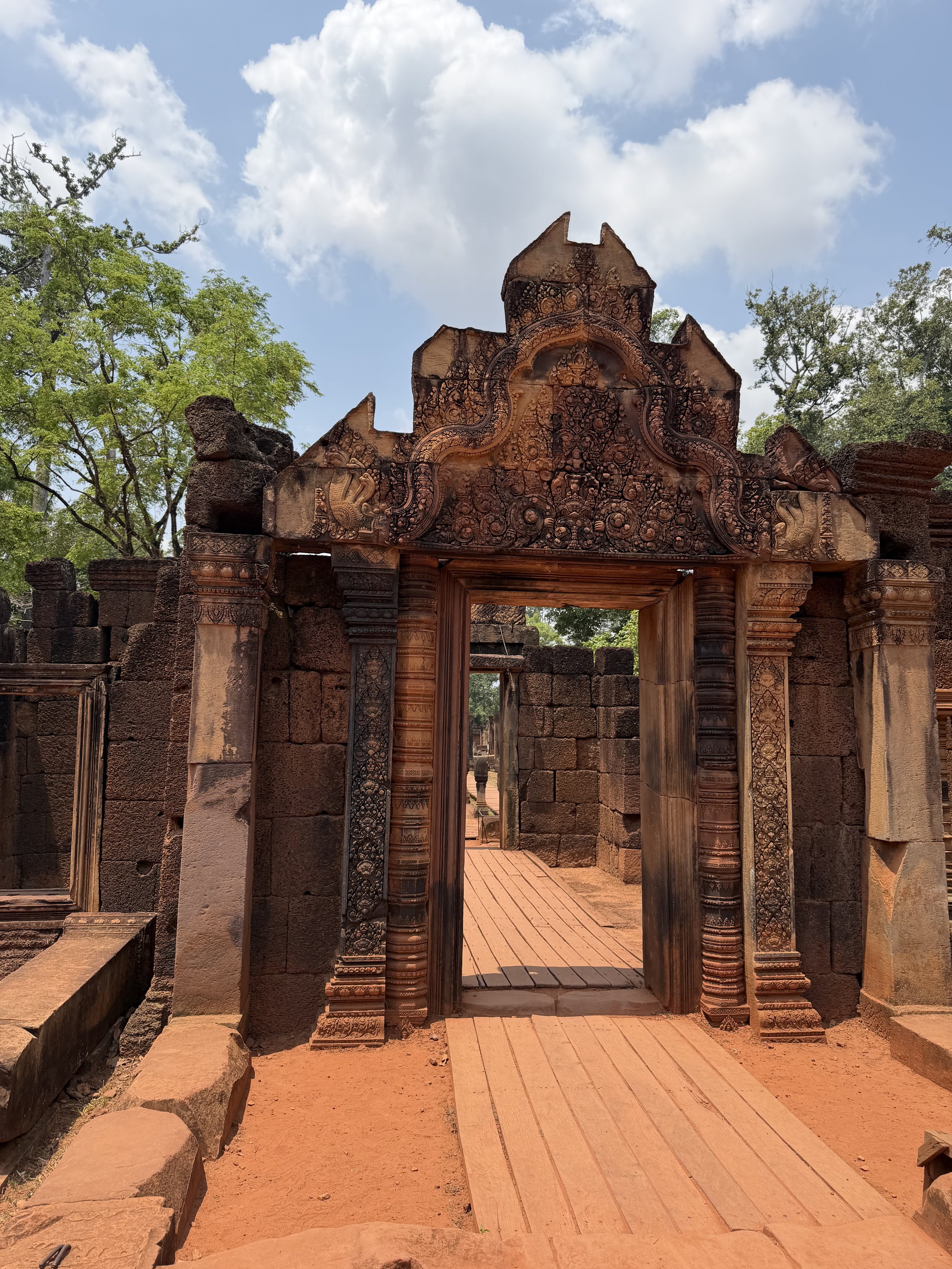
The first stop was Prasat Beng Mealea, and it's unlike anything you picture when you hear "Cambodian temple." It's unrestored, swallowed by jungle, stone and roots tangled together, and we shared it with maybe a handful of other people the entire time we were there. It felt less like a tourist site and more like something we'd stumbled onto. From there we went to Banteay Srei, a much more delicate, almost jewel-like temple built from red sandstone — a nice contrast after the wildness of Beng Mealea.
Checking into the jungle
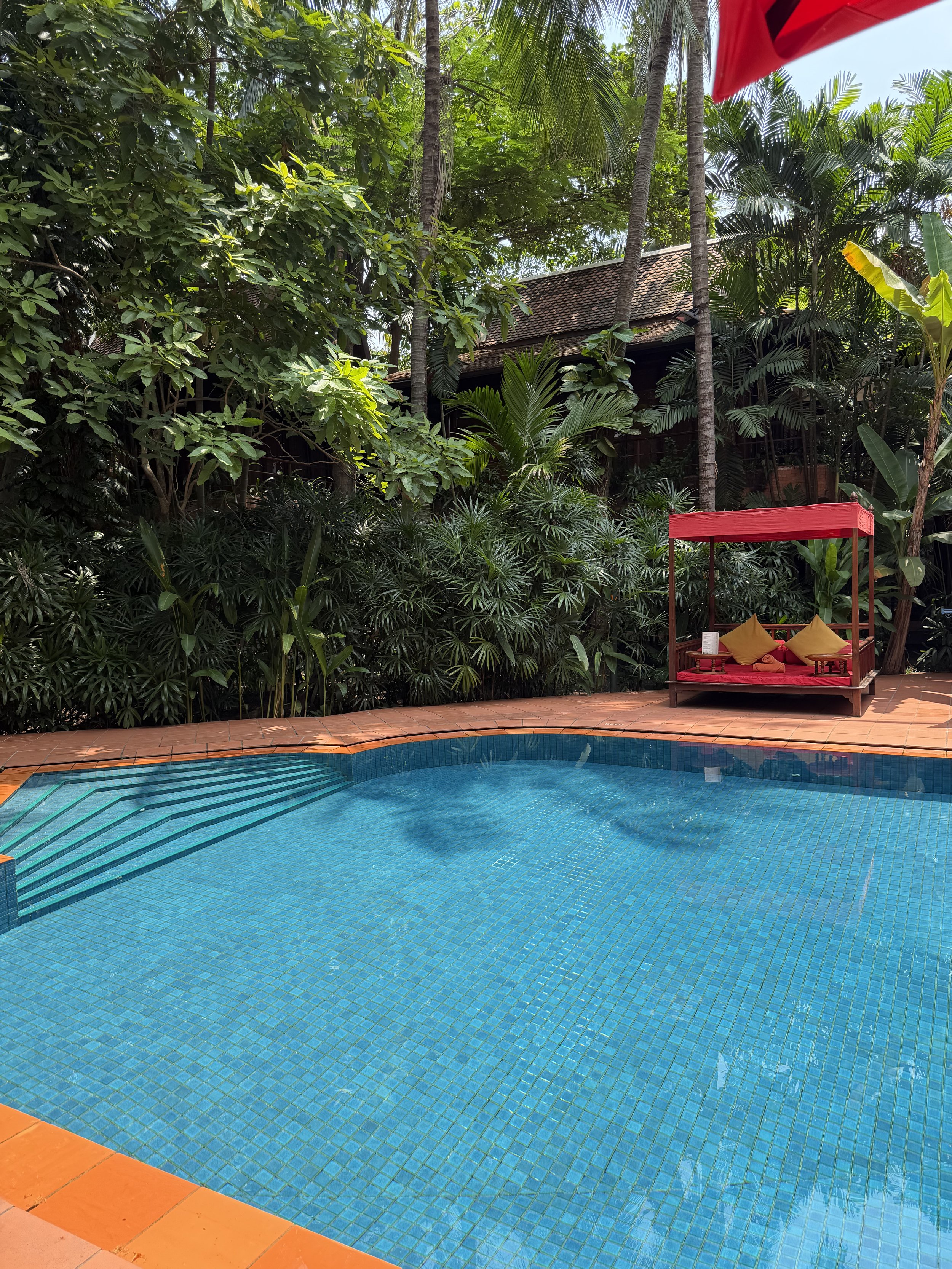
By the time we got to our hotel, Angkor Wat Village, we were ready to just sit somewhere shaded for an hour. The place turned out to be exactly the reset we needed, a small boutique hotel, part of Hilton's boutique portfolio, built around wooden walkways that wind through gardens and lily ponds. It has that particular Southeast Asia thing where almost nothing is fully enclosed or air-conditioned, which took some adjusting to, but also meant we were always half-outside, listening to the same insects and birds the whole stay.
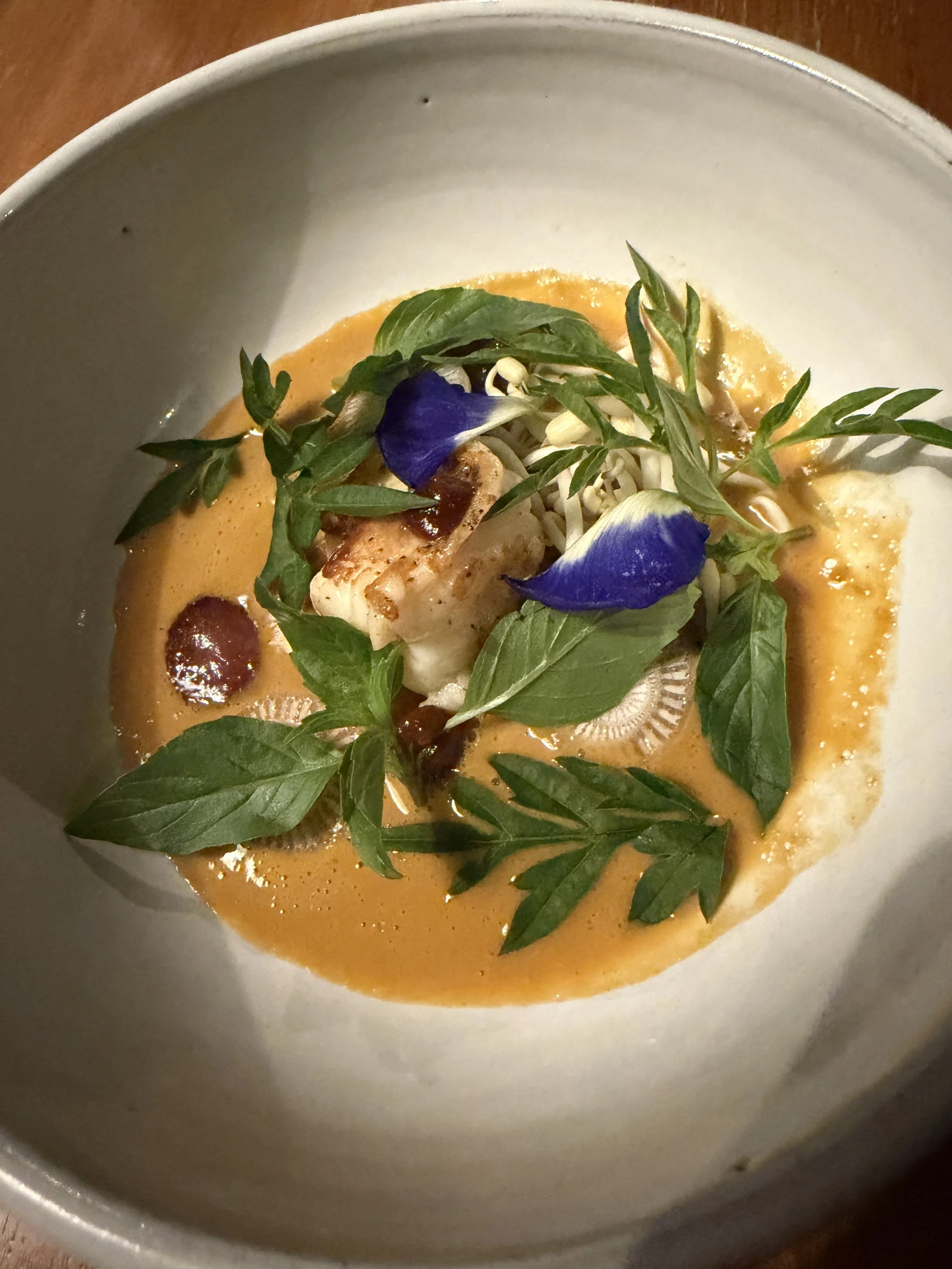
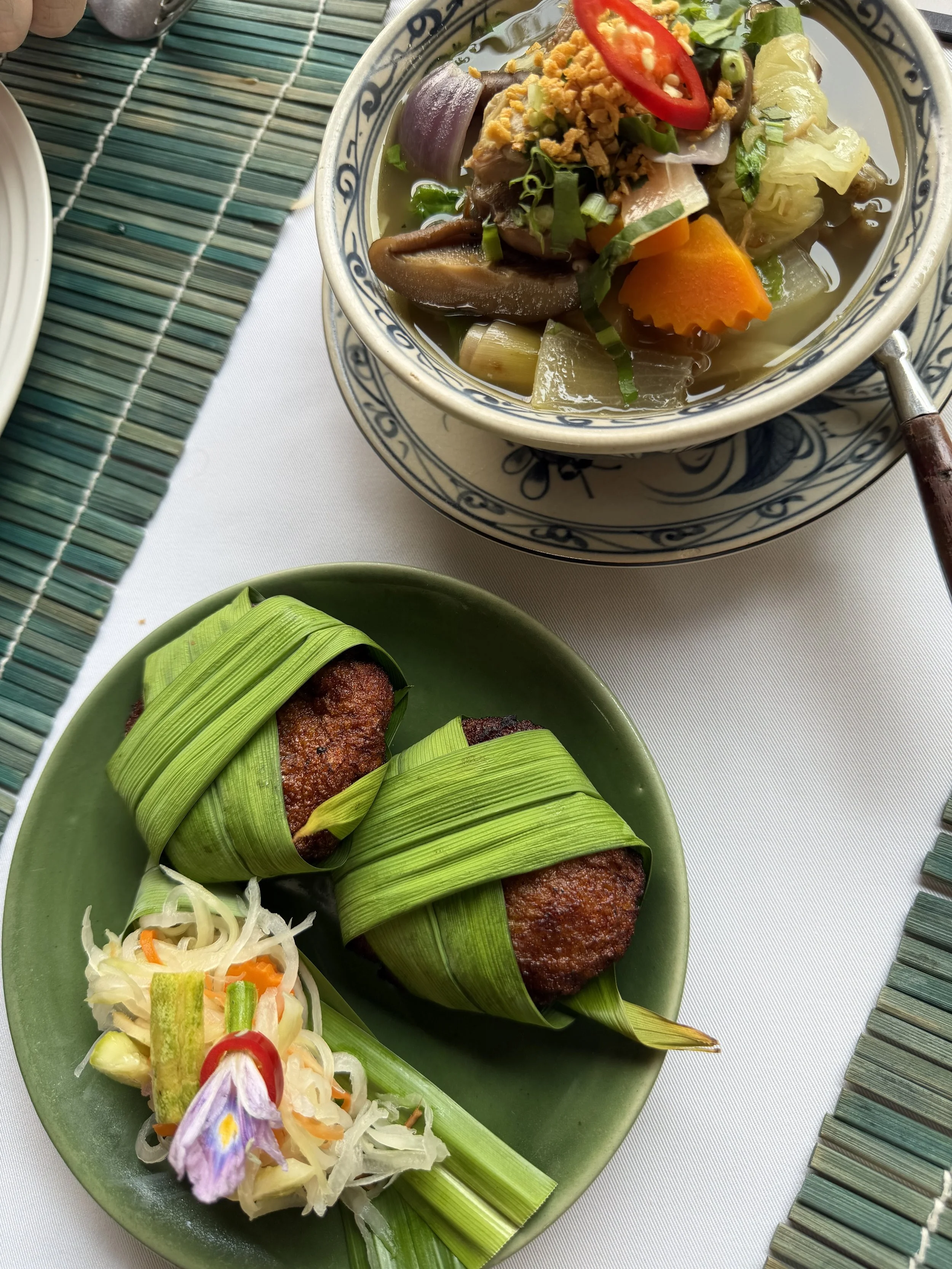
We had a late lunch that first day sitting beside the hotel's koi pond, and it might be the meal and food we've thought about most since getting home. The restaurant's whole concept is built around Cambodia's culinary history — dishes that trace back to the Angkorian era sitting on the same menu as modern interpretations. It turns out that history runs deep: Khmer cuisine dates back over a thousand years, to when the Khmer Empire's irrigation systems supported a cuisine built on rice, freshwater fish, and fermented staples like prahok. Indian spice traders left their mark even before Buddhism took hold, and there's a 12th-century carving at the Bayon temple that shows an actual Khmer kitchen, using tools still found in Cambodian homes today.
We ended up back at that restaurant again and again over the stay, including for the included breakfast, and never had a bad plate. If you only try a few things: the fish amok (Cambodia's signature dish, a fish curry that's richer and more delicate than it sounds), the pork and bamboo shoot in coconut broth, the oxtail pot-au-feu, the fish cakes wrapped in pandan leaf, and the black sticky rice with mango pudding, their answer to mango sticky rice, and somehow better.
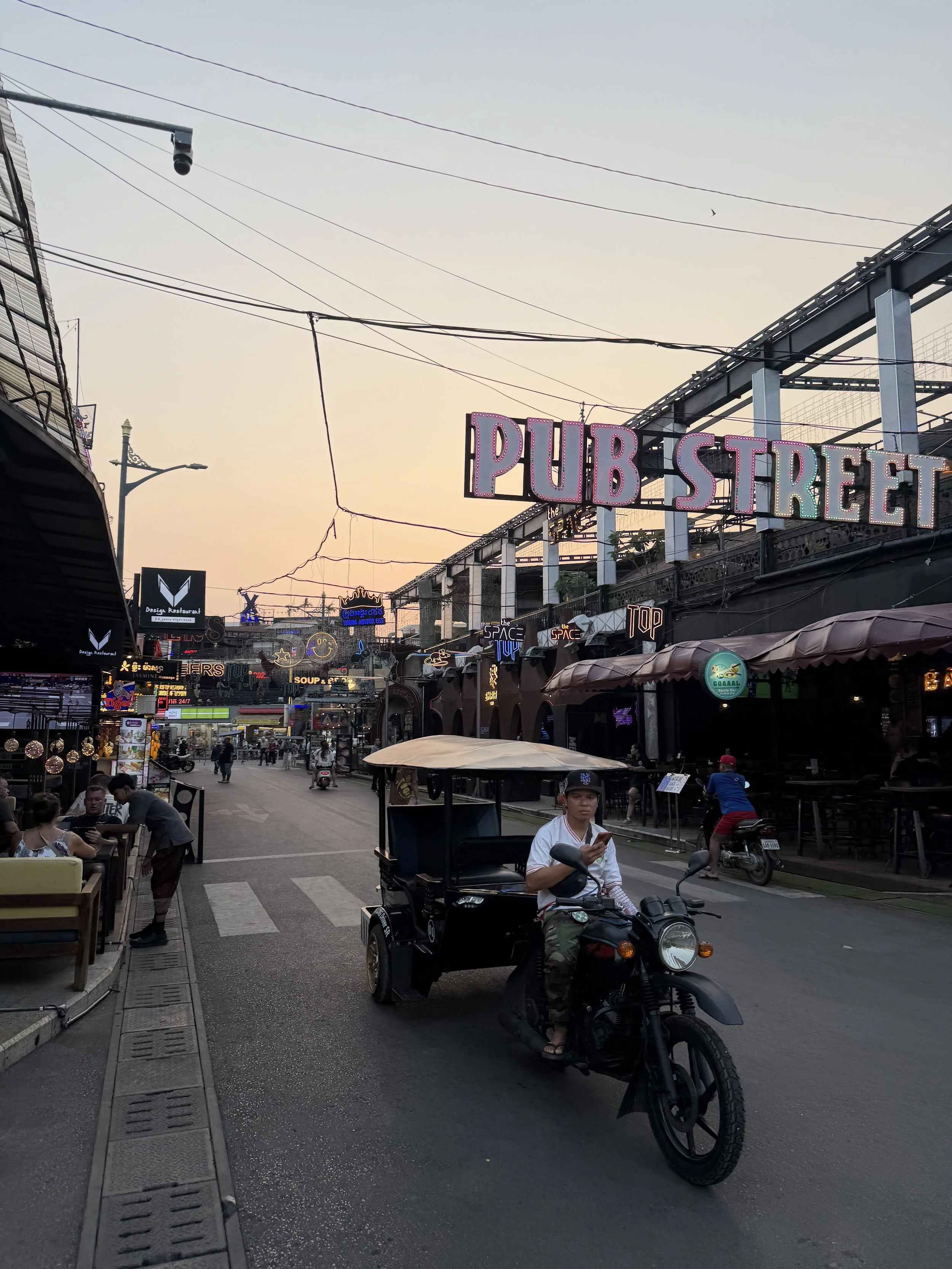
That evening we wandered into downtown proper, around Pub Street, while it was still early enough to be quiet. It's easy to see how it turns into something rowdier later in the night and later in the season, but at that hour it was just strings of lights and open-air restaurants filling up slowly. We had dinner at Chanrey Tree, a beautiful old wooden house right on the river, and ordered chicken amok, river fish with turmeric, stuffed frog, and palm sugar desserts. It was a quieter, more traditional counterpoint to the hotel's more composed version of the same cuisine. After dinner we found our way to Asana, a cocktail bar built into one of the last traditional stilted wooden houses left downtown, and spent a while on the swinging beds inside, not talking much, just glad to be off our feet.
Sunrise at Angkor Wat
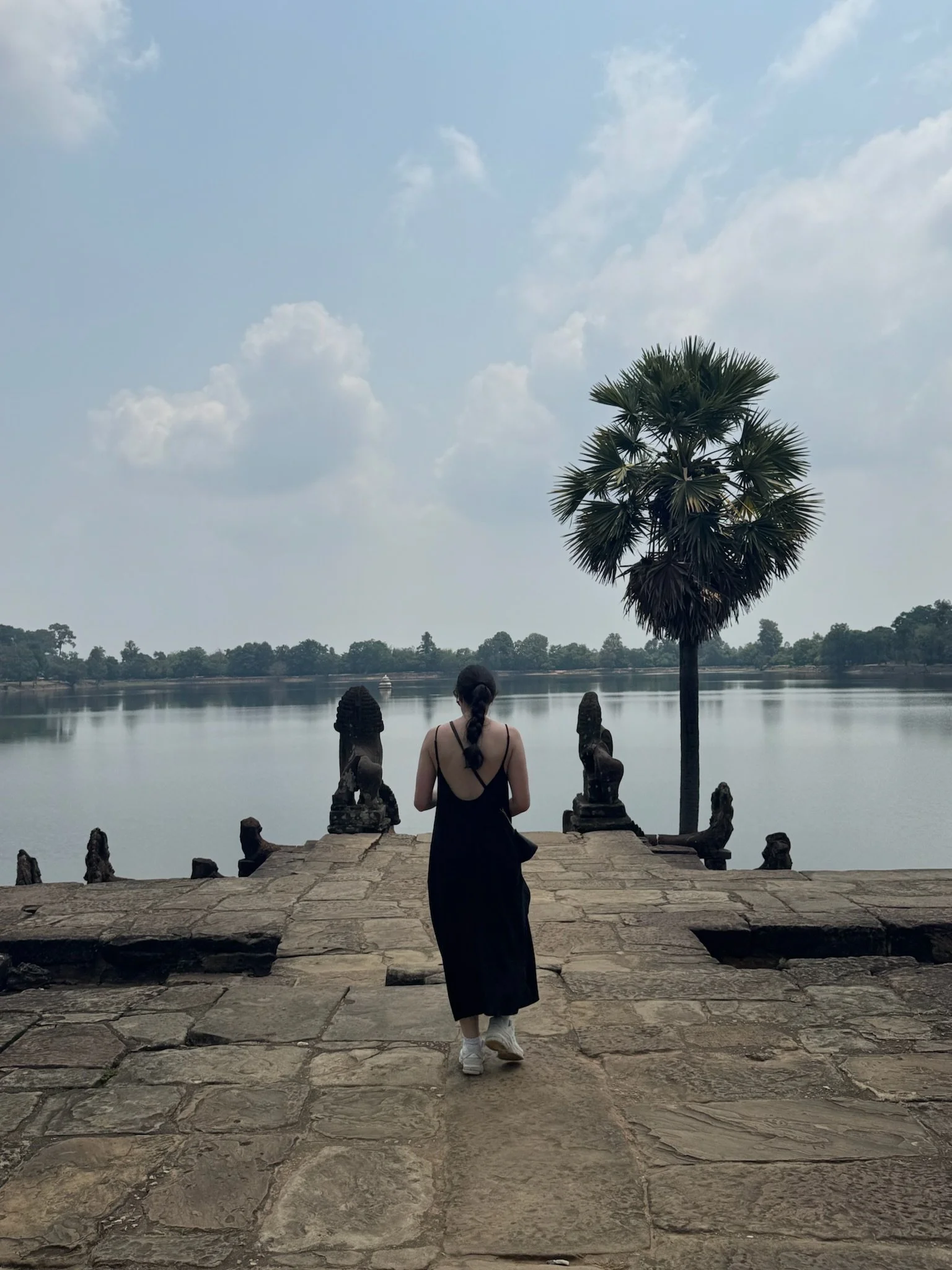
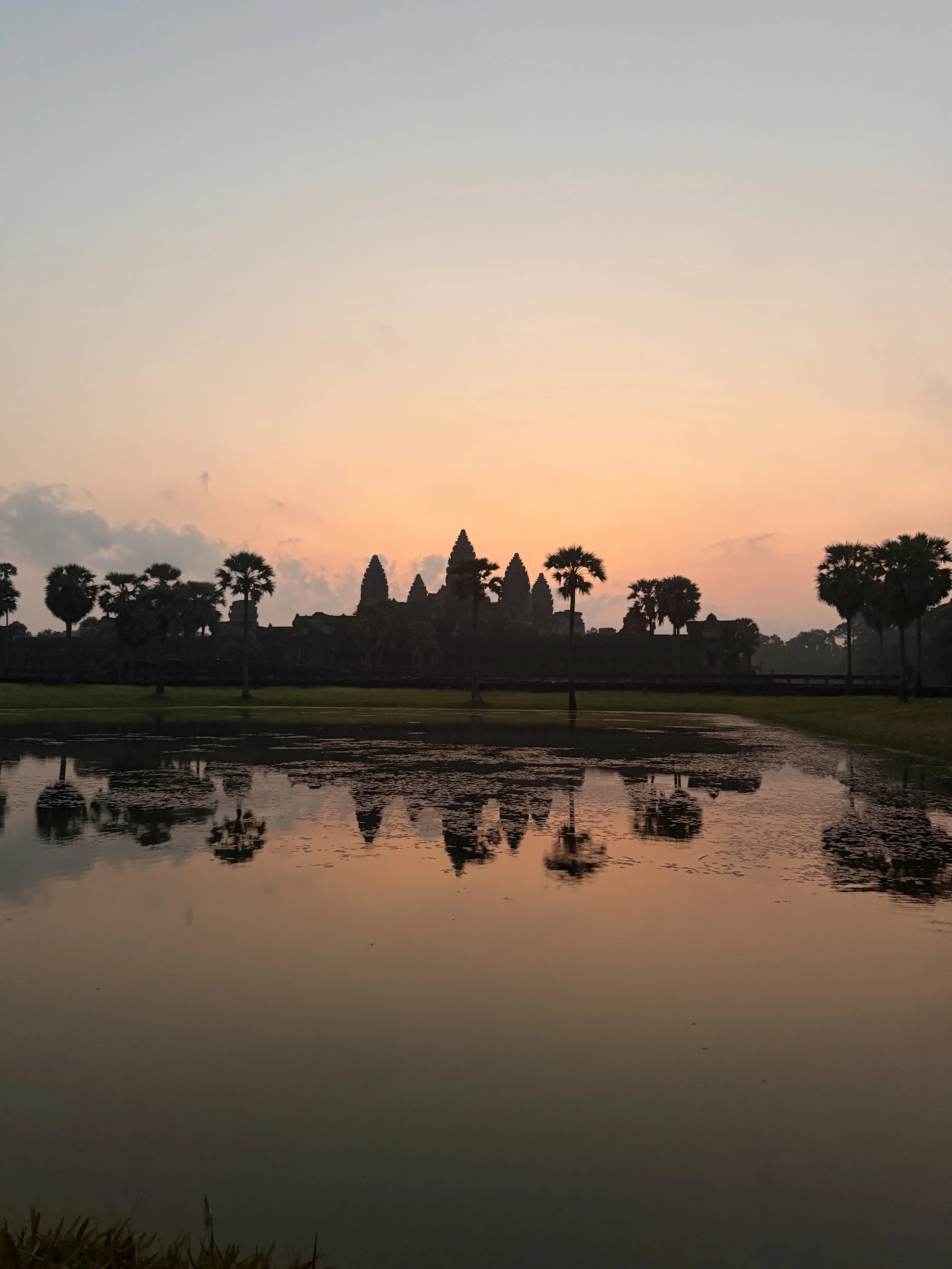
Our guide picked us up at 5am the next morning for Angkor Wat itself, and we got there early enough to claim a front-row spot at the reflecting pool. Then we waited. About thirty minutes of standing in the dark with a picnic breakfast and a thermos of coffee the hotel had packed for us, and by the time the sun actually cleared the towers, it was already pushing 90 degrees.
It's worth knowing what you're looking at while you're standing there. Angkor Wat was built in the early 1100s by King Suryavarman II, originally as a Hindu temple dedicated to Vishnu. A few decades later, after Angkor was sacked, his son Jayavarman VII rededicated it to Buddhism, and it's stayed an active Buddhist site ever since — it's the largest religious monument on earth, and its outline is literally on the Cambodian flag. As for why the sunrise specifically draws crowds: it's that one shot, the towers mirrored perfectly in the pool as the sky goes pink behind them, an image so tied to the country's identity that showing up for it feels almost obligatory. Which is exactly why the good spots fill up: everyone's there for the same reason we were.
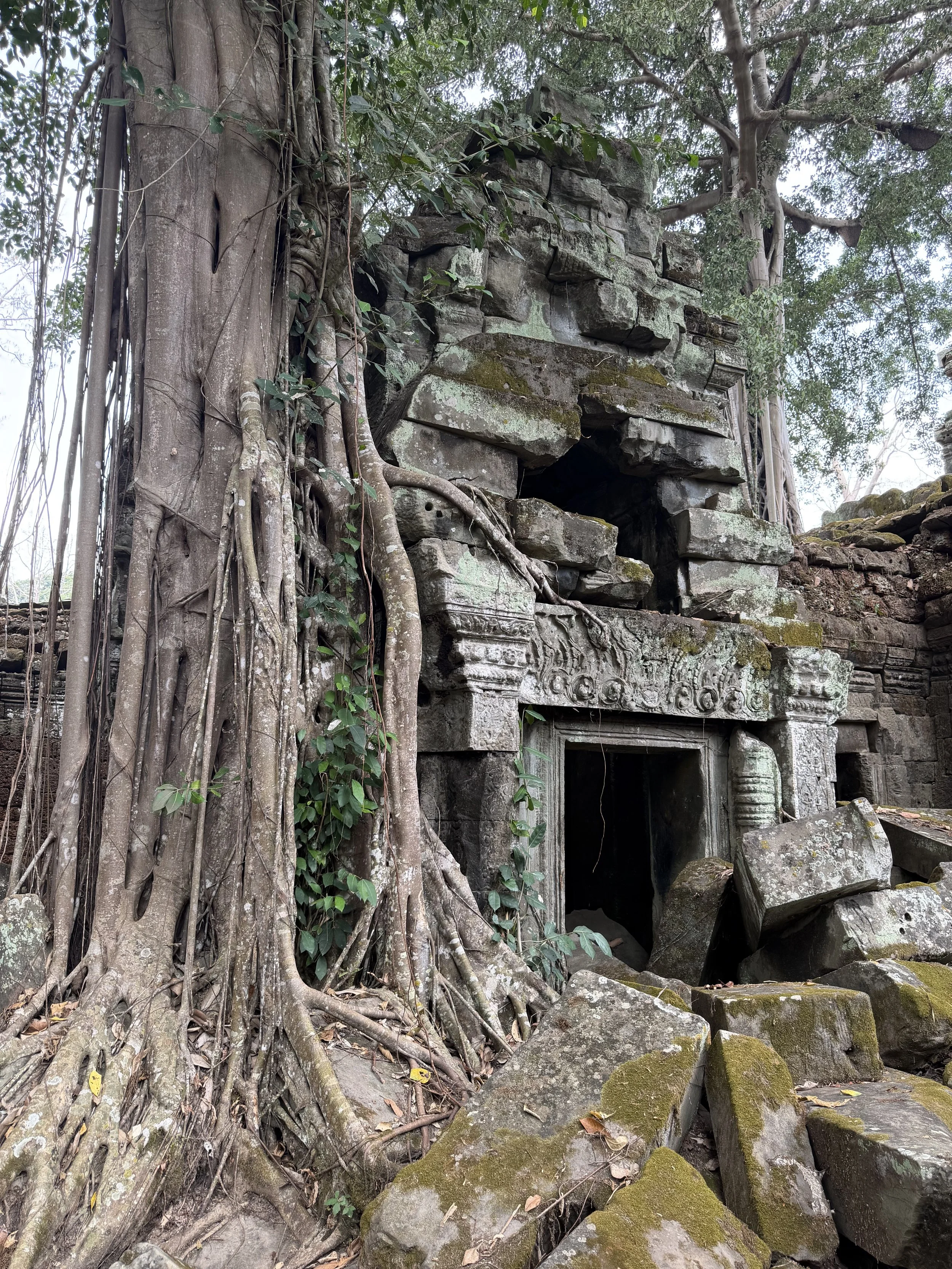
We spent the rest of the morning working through more of the complex, and it became clear pretty quickly that a day isn't enough. The scale of it, and the amount of carved detail on every surface, is hard to absorb even standing right in front of it. We stopped for a second picnic in front of a quieter, less-visited temple, then made our way to Ta Prohm — the one everyone calls the "Tomb Raider temple," where massive tree roots have grown straight through and over the stone. By the time we left, we were what our guide called "templed out," and the heat wasn't helping.
One thing I'd tell anyone packing for this: dressing for that kind of heat while staying modest enough for the temples is genuinely hard to get right. I mostly lived in loose linen dresses and kept a lightweight scarf on hand to cover my shoulders whenever we walked into a temple — I had one in three colors and used all of them constantly, for temples and for the flights, too. Cheap, small, and worth packing more than one.
We spent the afternoon doing nothing at the hotel pool, ordering food we didn't need and working through fresh juice smoothies and spritzes from the restaurant, which felt like the correct response to the morning. That night we went upscale, to Cuisine Wat Damnak for their tasting menu — a short Grab ride from the hotel — and it was a good place to land after a long, hot day: quieter, more composed, a nice bookend to two very full days. Getting around by tuk tuk the rest of the trip became one of our favorite parts of being in the city — a few dollars a ride, open to the air, and a much better way to actually see Siem Reap than staring out a car window.
The next day was a travel day, but a gentle one, just breakfast and a slow morning walk around town before we had to head to the airport. No temples, no itinerary, just wandering streets we'd already half-memorized and letting Siem Reap be ordinary for a couple of hours before we left it.